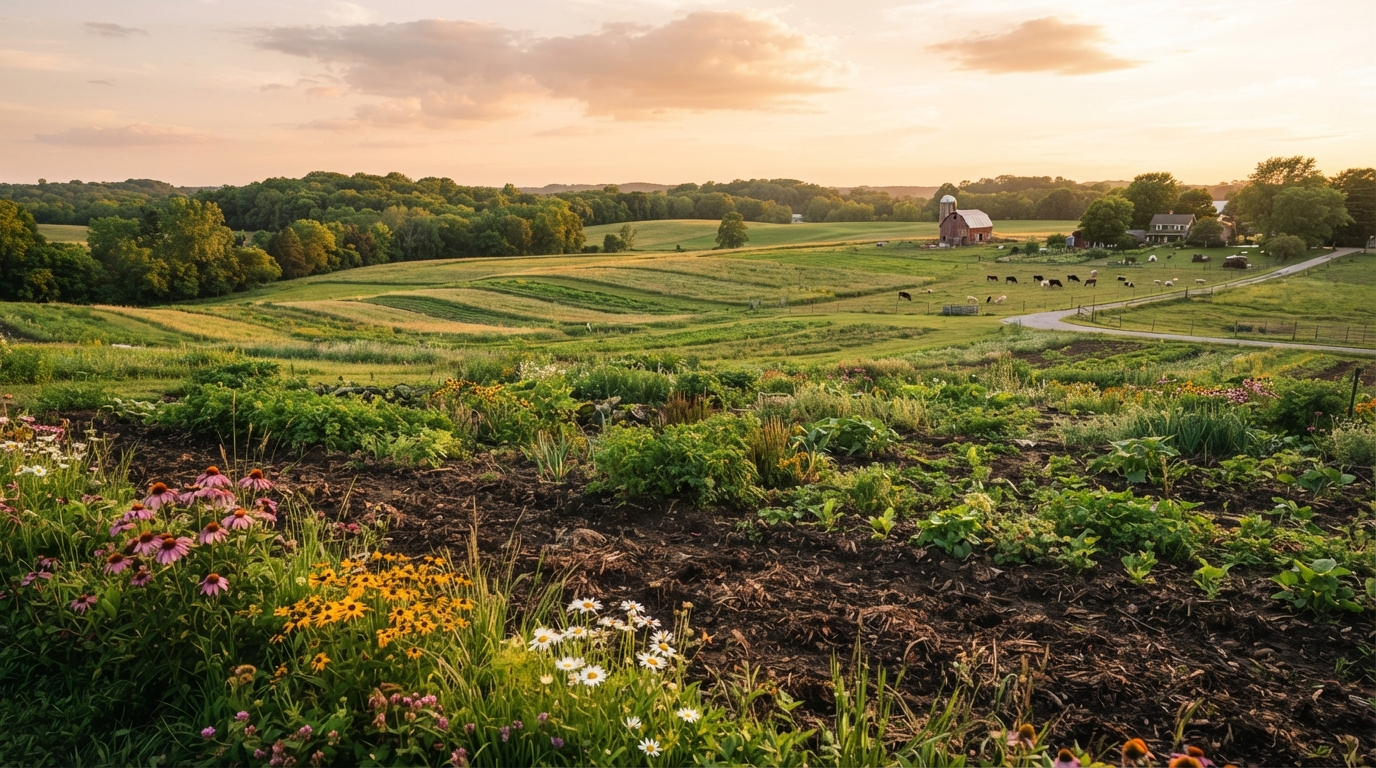
From Depleted to Alive:
Our Soil Story
When we started, this land was tired. Today, it's teeming with life. Here's how we got here—and why it matters.
The Starting Point
Like much of the farmland in the Midwest, the soil here had been farmed conventionally for over 50 years. Annual tillage, synthetic fertilizers, and herbicides had taken their toll.
When we first tested the soil, we found:
- • Organic matter below 2% — healthy soils typically have 4-6%
- • Compacted layers — roots struggled to penetrate deep
- • Low biological activity — few earthworms, minimal microbial life
- • Poor water infiltration — water pooled on the surface or ran off
The soil was surviving, but it wasn't living. We knew we had our work cut out for us—but we also knew it was possible to bring it back to life.
The Journey So Far
Regeneration doesn't happen overnight. Here are the key phases of our soil restoration journey.
Assessment & Listening
We started by testing the soil and observing what the land was telling us. The results confirmed what we suspected: decades of conventional tillage and chemical inputs had depleted organic matter to less than 2%. The soil was compacted, lifeless, and dependent on synthetic fertilizers.
Key Practices:
- Comprehensive soil testing
- Historical land use research
- Observation of existing vegetation
- Research into Organic Regenerative Agriculture
Building the Foundation
We stopped tilling and planted our first cover crop mix: cereal rye, hairy vetch, and buckwheat. The goal was simple: keep living roots in the soil year-round and start feeding the soil biology.
Key Practices:
- Minimum-till transition
- Multi-species cover crops
- Compost Tea application
- Minimal soil disturbance
Diversification
As the soil biology began to awaken, we diversified our crop rotations, planted multispecies cover crops, and established pollinator habitats. We also introduced honeybees and expanded flowering forage throughout the farm. The land began responding—earthworms and microbe colonies returned, water infiltration improved, biodiversity increased, and the soil became less dependent on outside inputs.
Key Practices:
- Diverse crop rotations (8+ species)
- Rotational grazing with mobile chicken coops
- Pollinator habitat establishment
- Perennial buffer strips
Integration & Resilience
Today, our farm is beginning to function as a living, interconnected ecosystem. Organic matter is increasing, the soil holds water longer, and we no longer use synthetic fertilizers, herbicides, or pesticides. With healthier soil structure and stronger biological activity, the land is becoming more resilient to drought and heavy rainfall while producing flavorful, mineral-rich, nourishing food.
Key Practices:
- Full integration of crops and pollinators
- On-farm compost tea and fertility cycling
- No synthetic inputs
- Continuous monitoring and adaptation
The Results Today
Twenty years in, the transformation is remarkable. The soil that was once compacted and lifeless is now dark, crumbly, and alive with organisms.
We've seen:
Increase+
Soil Organic Matter
100%
No Synthetic Inputs
30+
Crop Species Grown
∞
Learning & Growing
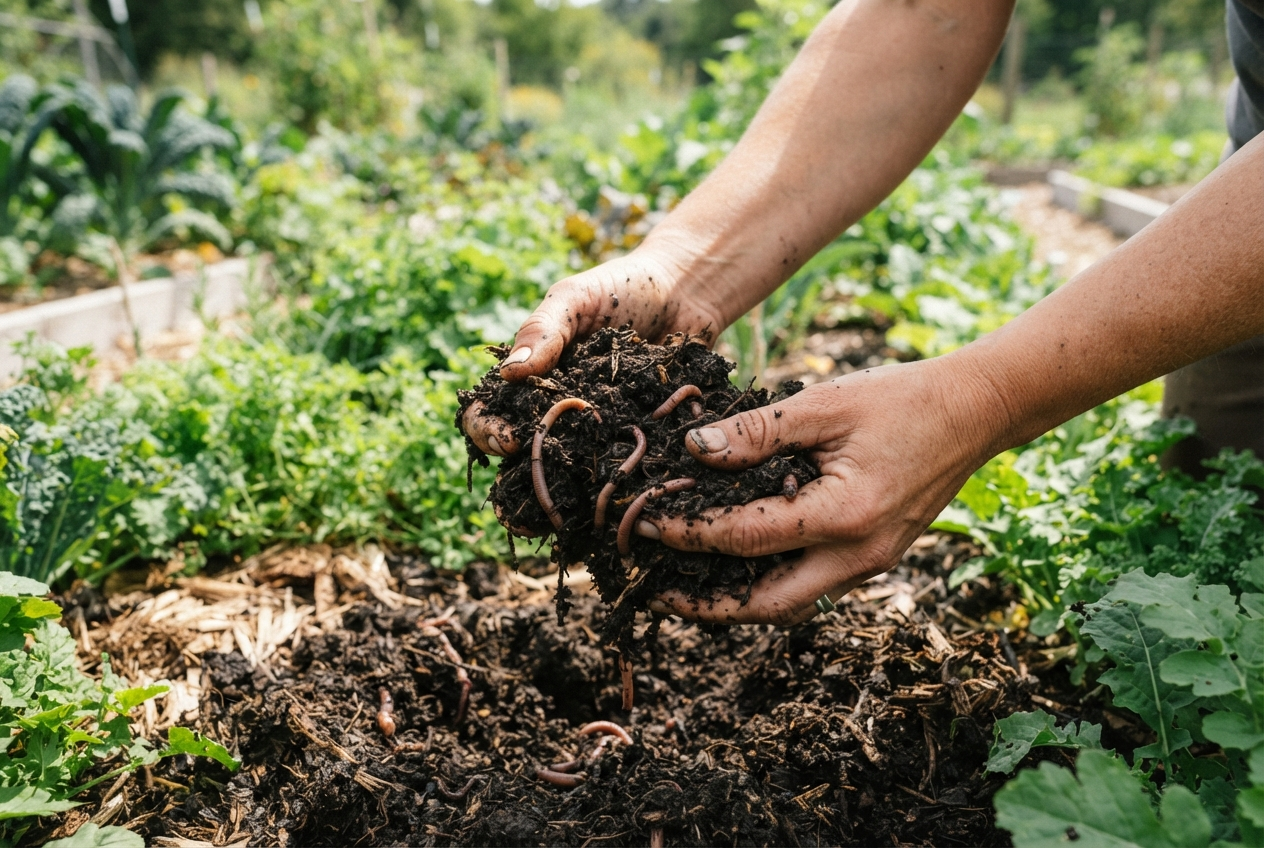
Why Soil Health Matters
Healthy soil isn't just good for farming—it's essential for clean water, climate stability, and human health.
Water Retention
Healthy soil acts like a sponge, holding water during drought and preventing runoff during heavy rains.
Biodiversity
A teaspoon of healthy soil contains billions of microorganisms that support plant health and nutrient cycling.
Carbon Sequestration
Regenerative soils pull carbon from the atmosphere and store it underground, helping combat climate change.
Nutrient Density
Plants grown in living soil are more nutrient-dense, providing better nutrition for the people who eat them.
The Journey Continues
Organic Regenerative agriculture is not a destination—it's a continuous process of observation, adaptation, and improvement. Every season teaches us something new. Every crop rotation reveals another layer of complexity in the soil ecosystem.
We're constantly experimenting with new cover crop mixes, refining our planting rotations, and exploring ways to integrate more perennial plants into our system. We're also sharing what we learn with other farmers in our region, because we know that the more land we can regenerate together, the greater the impact.
This journey isn't just about our farm—it's about demonstrating that a different way of farming is possible. A way that heals instead of harms. A way that builds instead of extracts. A way that leaves the land better than we found it. This helps create a place where the land, nature, and people can flourish together in harmony for centuries to come.
See the Soil for Yourself
We'd love to show you what regenerative soil looks and feels like. Visit the farm, walk our fields, and see the results of this journey firsthand.