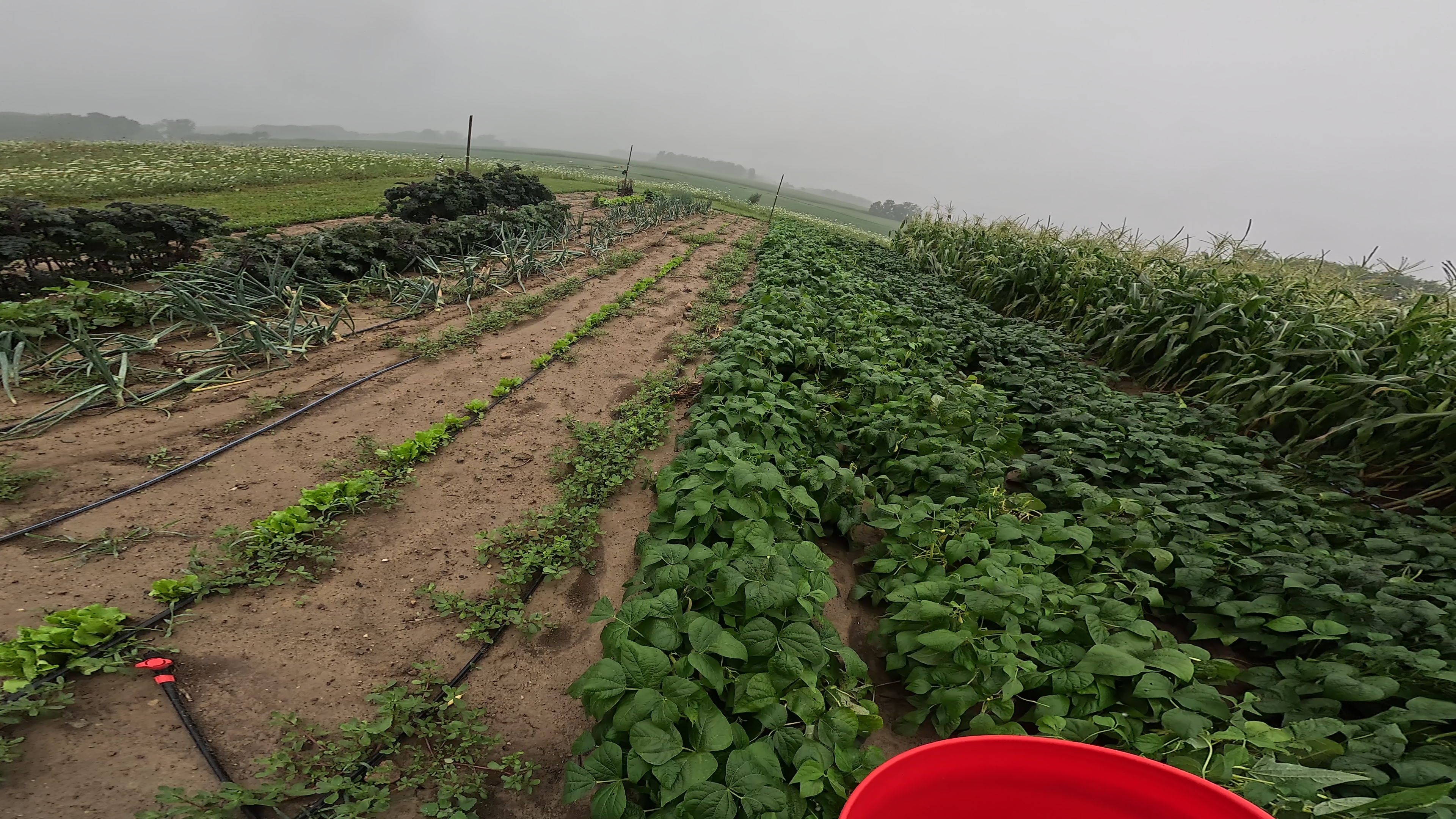
How to Restore Degraded Soil: The Complete Playbook
When we first took stewardship of our land, the soil told a difficult story. After decades of conventional chemical farming—heavy spraying, monocrops, and complete reliance on synthetic inputs—the biological life was gone. The soil was compacted, depleted, and struggling. But here’s what we learned: degraded soil can recover. It takes patience, intention, and a systematic approach. This is the playbook we’ve used to bring our 30+ acres back to life.
Why Soil Restoration Matters
Before diving into the how, understand the why. Chemical agriculture treats soil as an inert growing medium—something dead—in order to pump man-made chemicals into it and extract man-made chemical nutrients from it. Regenerative agriculture recognizes soil as a living ecosystem. That living ecosystem is where the magic happens:
- Microbes and fungi form symbiotic relationships with plant roots, making nutrients available that wouldn’t otherwise be accessible.
- Soil structure improves, increasing water retention and drainage.
- Carbon sequestration stores atmospheric carbon below ground (good for the planet, good for your crops).
- Pest and disease resilience emerges naturally when the soil food web is intact.
- Nutrient density in the food you grow increases dramatically.
The degraded soil we inherited was essentially dead. Restoring it means rebuilding the entire living system from the ground up.
Step 1: Test and Listen
The first step isn’t doing anything—it’s observing.
What we did:
- Sent soil samples to a lab for a comprehensive analysis: organic matter %, nutrients (N-P-K and micronutrients), pH, microbial count, fungal-to-bacterial ratio
- Walked the land multiple times, observing water movement, compaction zones, erosion patterns, and existing plant life
- Asked neighbors and reviewed historical records about previous farming practices
Why it matters: Soil condition varies dramatically across a property. A field that was continuously monocropped will be more depleted than a pasture that was grazed. Wet zones need different strategies than well-draining zones. You can’t fix what you don’t understand.
What to look for:
- Organic matter below 2%? Your soil is depleted. 3-5% is healthy; 5%+ is thriving.
- Fungal-to-bacterial ratio inverted? You likely have a bacterial-dominated system from years of tillage; fungal networks are what build structure.
- pH way off? Acidic soils need lime; alkaline soils need sulfur. This is a prerequisite to everything else.
- Compaction layers (hardpan) from deep plowing? You might need subsoiling before you start building.
Step 2: Stop the Bleeding
Before you rebuild, you have to stop making things worse.
Reduce or eliminate tillage: This is non-negotiable. Tillage destroys fungal networks that take years to rebuild, oxidizes carbon, and disrupts soil structure. We moved to no-till and minimum-till practices immediately. If you must prepare beds, use broadforks or shallow cultivation only.
Cut the chemical inputs: Synthetic fertilizers feed plants temporarily but starve the soil biology. Pesticides and herbicides directly kill the microbes you’re trying to rebuild. We eliminated all synthetic inputs year one, even though yields dropped initially.
Establish living roots year-round: Bare soil is dead soil. We moved to winter cover crops and succession planting so the soil is never exposed. Living roots feed the soil food web, prevent erosion, and suppress weeds.
Add organic matter immediately: Compost, aged manure, mulch—whatever you can source. This feeds biology and begins rebuilding structure. We prioritize compost and compost tea.
Step 3: Build Biological Life
This is where restoration accelerates. You’re feeding the microbes, fungi, and organisms that make soil alive.
Compost and Compost Tea
We make 20-40 cubic yards of compost annually using farm waste, kitchen scraps, aged manure, and grass clippings. We apply it directly to beds at 1-2 inches annually. For faster results, we brew compost tea: steep finished compost in aerated water with added minerals and biology, then spray it on the soil.
Why it works: Compost introduces beneficial bacteria, fungi, and protozoa. It provides organic matter that aggregates soil particles into structure. It adds slow-release nutrients.
Mycorrhizal Fungi and Microbial Inoculants
We use products containing mycorrhizal spores and beneficial bacteria. These are applied at planting or with compost applications. They speed up the establishment of fungal networks that would otherwise take years to rebuild.
The science: Mycorrhizal fungi connect plant roots to nutrient sources much farther away than root hairs can reach. They’re so effective that in nature, most plants can’t grow without them.
Mineral Amendments
Degraded soil is often mineral-deficient, not just biologically dead. We add:
- Ocean minerals (sea solids, kelp): Broad spectrum of trace minerals the soil lacks
- Rock minerals (rock phosphate, glacial rock dust): Slow-release minerals, food for bacteria
- Calcium (lime): If pH is too low; also provides structure-building calcium
- Sulfur (if pH is high): Moderates alkalinity
We test first, then amend based on deficiency, not a generic recipe.
Step 4: Diversify and Integrate
Degraded soil lived under monoculture. Recovery requires diversity.
Crop Rotation and Cover Crops
We rotate crops annually and use multispecies cover crop blends, not single covers. A mix might include:
- Legumes (alfalfa, hairy vetch, clover): Fix nitrogen; feed bacteria
- Grasses (oats, rye, field peas): Build structure; feed fungi
- Brassicas (radish, turnip): Break compaction with deep roots
- Flowers (phacelia, borage): Feed pollinators; attract beneficial insects
Why it works: Different plants feed different soil biology. Legumes feed nitrogen-fixing bacteria. Deep-rooted plants create channels and bring up deep minerals. Diversity creates resilience.
Integrated Livestock and Pollinators
We integrated honeybees from year two. Bees don’t directly improve soil, but their flower-rich habitat does: flowers feed the soil web, and the ecosystem complexity helps. Some regenerative farms integrate grazing animals; we don’t, but rotational grazing can rebuild degraded land quickly.
Perennial Infrastructure
Where possible, we planted perennial flowers, shrubs, and trees. Perennials don’t require tilling, their root systems build deep structure, and their habitat supports beneficial insects and pollinators year-round.
Step 5: Monitor and Adjust
Restoration isn’t linear. We test soil every other year and adjust our strategy based on what the numbers tell us.
What we’ve tracked:
- Organic matter: Now 4-6% in our best beds (up from <1% initially)
- Fungal-to-bacterial ratio: Now 1:1 to 2:1 in most areas (was reversed at the start)
- Microbial count: Roughly 4x higher than when we started
- Earthworm populations: Abundant now; nearly absent initially
- Water infiltration: Improved dramatically (less runoff, better drought resilience)
Adjust as you go:
- If cover crops aren’t thriving, you might need more mineral or compost
- If fungal networks are slow to establish, increase mycorrhizal inoculants
- If pests are increasing, it might mean the soil food web isn’t developed enough to support natural predators yet
The Timeline: Patience Pays
This is the hardest part: it takes time. Here’s roughly what to expect:
- Year 1: Establish practices, add massive organic matter, first cover crops. Results are modest; yields may drop.
- Year 2-3: Organic matter increases, biology starts establishing. Yields recover. Pest pressure decreases.
- Year 3-5: Fungal networks mature, soil structure solidifies. Yields exceed pre-degradation levels. Resilience improves dramatically.
- Year 5+: You have a living soil system. Maintenance is mainly succession planting and strategic inputs.
We’re 5+ years into our restoration, and our soil is genuinely alive. What took decades to degrade has taken 5-6 years to rebuild significantly.
A Word on Patience and Purpose
Regenerative restoration isn’t about yield maximization or cutting costs short-term. It’s about building a system that produces nourishing food, sequesters carbon, supports biodiversity, and remains productive for generations. Some years the economics are tight. But the long-term returns—in soil health, water quality, biodiversity, and food nutrition—are undeniable.
Your soil already has the capability to recover. It’s been healing ecosystems for 300 million years. Your job is to stop the damage, feed the biology, create diversity, and get out of the way.
Want to see regenerative restoration in action? Visit You Are What You Eat Farms to walk our restored soils, taste food grown in them, and talk with us about what we’ve learned.
See regenerative farming in action
Visit You Are What You Eat Farms to experience soil restoration, taste nutrient-dense food, and learn from our journey.
Plan Your Visit